
Canadian First-time Homebuyers Guide 2025

Becoming a homeowner is one of the biggest decisions you’ll ever make, and we’re excited to help you through it. It might seem daunting but you’ll be a home ownership expert by the time you finish reading.

July 31, 2025
What you should know as a first-time homebuyer
Whether you’re looking for a house, condo, or townhouse, becoming a homeowner is one of the biggest decisions you’ll ever make.
While the process can be exciting, it can also be a little scary. This first-time homeowner’s guide is designed to simplify every step —covering mortgage, home insurance, renovations and closing costs.
If you’ve already got some of these steps covered, feel free to skip ahead to wherever you are in the first-time homebuying process.
Everything on Canadian mortgages
Choosing between a fixed- or variable-rate mortgage is going to impact your budget for years to come, so knowing the difference between the two from the outset is crucial.
A fixed mortgage keeps your interest rate unchanged throughout the term while a variable-rate mortgage fluctuates alongside each federal interest rate change. Variable rates come with the potential to save you money if interest rates drop —but also the risk of higher costs if rates rise.
Key takeaways from this section:
- All Canadian homebuyers will have to pass the stress test. This checks to see if you can afford your mortgage payments even if interest rates go up.
- Choosing a lender. You’ll have to choose between getting a mortgage from a bank, a broker, or an alternative lender. Each of these options has pros and cons.
- Accelerating your mortgage payments can help you pay off your mortgage faster by not only shortening the life of the mortgage but also reduces the total interest you’ll pay over time.
What is a mortgage?
In simplest terms, a mortgage is a loan given to you by a lender (a bank or broker, or private lender), secured by property (which acts as collateral).
When you get a mortgage, you’re taking on the obligation of making monthly payments that go toward the interest and principal amount of your mortgage for years to come.
In order to secure a mortgage, you’re required to make a down payment on your property. (Jump ahead to the down payment section using the menu on the left for more details).
How to get a mortgage
You can get a mortgage from either a bank or broker. Most lenders today will allow you to complete your application entirely online, making the process more convenient. They’ll assess whether you qualify for a mortgage, how much you qualify for, and the loan’s interest rate — otherwise known as the mortgage stress test.
Whether you pass the stress test is based on your credit score, employment status, income, and several other factors.
You should make sure you have all essential documents ready when you apply for a mortgage. They include pay stubs, your most recent credit score, and up-to-date personal information
Keep in mind, you have a say in the process too. Comparing the market and shopping for the best mortgage rate in your area can help you decide which lender is right for you.
What is a mortgage term?
A mortgage term is a period in which specific factors of your mortgage, such as your interest rate and payment frequency, are in effect.
The most common mortgage terms in Canada are three or five years — however, you can opt for mortgages that have terms anywhere from one to 10 years.
The length of your term should be determined by your future plans. If you believe you’ll be selling your property next year, for instance, opting for a five-year term might not make sense since you could be hit with a prepayment penalty (if you were to break your mortgage early).
You’ll also find that different terms come with different interest rates. For instance, interest rates on 10-year terms tend to be higher than those on one-year terms.
What is mortgage amortization?
Amortization is the total length of time you have to pay off your mortgage. The most common amortization in Canada tends to be 25 years. The longest amortization period available is for uninsured mortgages and can be as long as 35 years.
As your amortization period goes on, you’ll find that more and more of your money will go toward principal payments, and less will go toward interest.
As of December 15, 2024, eligibility for 30-year amortization periods has been extended to all first-time homebuyers and buyers of new builds. This reduces monthly mortgage payments, making homeownership more accessible.

Fixed versus variable: what’s the difference?
A fixed-rate mortgage has an interest rate that remains the same throughout your mortgage term. Meanwhile, a variable-rate mortgage will fluctuate depending on market forces, such as the overnight policy rate determined by the Bank of Canada.
The debate of one type over the other will challenge most first-time homebuyers when choosing a mortgage. A fixed-rate mortgage can offer peace of mind but often comes at the cost of a higher interest rate.
On the other hand, variable rates offer the potential to pay less interest over the life of a mortgage if interest rates fall or remain unchanged. However, they also present risks. When the Bank raises its policy rate significantly (like we’ve experienced over the past year), variable rates can quickly turn higher than fixed rates. If interest rates go up, so will your mortgage rate, which means higher monthly payments.
What are you looking for? Compare the best mortgage rates in three minutes.
The mortgage stress test
Getting a mortgage in Canada requires undergoing a stress test to see if you can handle your mortgage payments if interest rates were to rise. Since the mortgage stress test was introduced in 2021, borrowers have had to show they can afford their mortgage rate set by their lender, plus 2%, or a flat interest rate 5.25%, whichever is higher.
All borrowers — not only those with less than a 20% down payment — must pass a mortgage stress test if they apply for a mortgage, refinance their existing mortgage loan, or switch lenders. However, mortgage holders who renew with the same lender do not have to pass a stress test.
However, the Canadian Mortgage Charter, introduced in 2023, allows insured mortgage holders to switch lenders at renewal without undergoing another stress test.
Banks, brokers and credit unions
There are a variety of lenders in Canada that are willing to offer you a mortgage. It’s important to know the difference between them.
Banks are the most common option for mortgages in Canada, especially because most already have a pre-existing relationship with them through everyday banking needs. However, you won’t always find the best mortgage rates from your bank, and getting lower rates may require negotiation.
Brokers, by contrast, shop the market for you. They help you find what the best mortgage rate is from the various lenders they work with. This would include the major banks. They also have the option to lower a mortgage rate by adjusting their commission to pass on greater savings to a borrower.
Finally, credit unions in Canada are community-focused lenders that tend to have customers in certain cities or provinces. While they may be less common, one advantage credit unions have is that they are not subject to the mortgage stress test (B-20) — which means that borrowers can potentially qualify for larger mortgages by going with a credit union.
Private lenders offer mortgages in Canada, in addition to banks, brokers, and credit unions. These lenders tend to take on higher-risk clients and charge much higher interest rates. This sector of the mortgage industry is not regulated.
How large should your mortgage be?
Financial experts generally all have the same advice for first-time home buyers: make sure you don’t wind up house poor.
In other words, your mortgage should only be as large as you can afford. It might be tempting to pay more than you plan to during your house hunt, but it’s important to set a budget and stick to it. That way, you don’t run into problems down the road paying for other bills and saving.
Lenders in Canada follow the Canadian Mortgage and Housing Corporation’s (CMHC) gross debt service ratio (GDS) when giving homebuyers mortgages — the GDS states that your monthly housing costs shouldn’t be any more than 39% of your gross monthly income. At the same time, your total debt service ratio (TDS) — the percentage of your monthly income that goes towards housing costs and all debts — should not be more than 44%.
The CMHC has first-time home buyer guides and resources to navigate the home buying process, including a handy checklist to determine your living costs.
Maximum Gross Debt Service (GDS) Ratio as a percentage of gross monthly income.
- Remainder of Gross monthly income
- 61%
- Maximum Monthly Housing Costs
- 39%
Maximum Total Debt Service (TDS) Ratio as a percentage of gross monthly income.
- Remainder of Total Monthly Income
- 56%
- Maximum Monthly Housing Costs
- 44%
Open versus closed mortgages
Most mortgages in Canada are closed mortgages, which means that you cannot pay off your mortgage early without incurring penalties.
The specifics of closed mortgages tend to vary from lender to lender. For instance, some lenders may allow you to make extra payments every year up to a certain limit, without fully paying it off or facing penalties.
Open mortgages, on the other hand, are more flexible. You can make additional payments or even pay off the entire mortgage without penalty. However, they typically come with higher interest rates, which can offset the convenience of doing so. Open mortgages might make sense for investors or those who feel they may sell off their property in the near future.
What is an accelerated payment?
An accelerated payment is the ability to increase your monthly payments so that you’re putting more money toward your principal mortgage payments. This allows you to pay off your mortgage sooner.
Not all lenders offer accelerated payments. Make sure to ask your lender if they do before accepting a mortgage to avoid any penalties.
What is a prepayment charge?
A prepayment charge is a financial penalty you incur if you pay off your mortgage early, against the terms of your mortgage. Penalties vary depending on your lender’s rules, but often times they can be quite steep.
Those wanting to avoid prepayment charges should consider an open mortgage or a mortgage with a shorter term.
Incentive programs for first-time homebuyers
One of the biggest benefits of being a first-time home buyer is that you have access to unique government incentives.
These programs are designed to provide financial relief to first-time buyers in the form of tax credits, rebates, and equity sharing.
Some of these incentives include:
First-time Home Buyers' Tax Credit: Also known as the Home Buyers’ Amount (HBA), this incentive allows you to claim up to $10,000 on your taxes if you, or you and your spouse/common-law partner bought a home for the first time. Conditions apply, so be sure to do your research.
GST/HST New Housing Rebate: If you bought a house from a builder or built your own house, you could get back some of the GST/HST you paid on that purchase with the New Housing Rebate. Depending on the province you live in, you might also qualify for a provincial rebate.
Tax-free First Home Savings Account: Canadians have access to the Tax-Free First Home Savings Account (FHSA), a registered plan designed to help first-time homebuyers save for a down payment.
Contributions to the FHSA are tax-deductible, and withdrawals made to purchase a qualifying first home are tax-free. The account has an annual contribution limit of $8,000, with a lifetime cap of $40,000.
Unused contribution room can be carried forward to the following year, up to a maximum of $8,000. The account can remain open for up to 15 years or until the account holder turns 71, whichever comes first.
Down payment
A down payment is the amount of money you’ll pay up front to get a mortgage.
Key takeaways:
- The downpayment amount will be deducted from the overall purchase price of your home.
- The minimum down payment in Canada is at least 5% but may be more depending on the price of your home.
- Homebuyers have the option to use $60,000 of their RRSP savings for their down payment as part of the HBP.
What is a down payment?
A down payment refers to the amount of money you’ll pay up front to get a mortgage. It is your biggest expense as a first-time homebuyer and will account for a large chunk of the overall purchase price of your home.
Your mortgage will cover the rest of your home’s price, which is also referred to as your mortgage principal.
In addition, a down payment can also function as a bargaining tool. The larger your down payment, the more leverage you’ll have when you negotiate with your mortgage lender to secure a great interest rate — and the less you’ll have to pay throughout your term.
If you’re buying a home and you know how much money you’d like to put towards the down payment, you can compare rates from mortgage lenders in your area and pick the best one or use it to negotiate.
Your down payment should consist of money you actually have. While down payments can be gifted from a family member, they can’t be borrowed.
What is the minimum amount for a down payment in Canada?
In Canada, you’re legally required to put down a specific amount (or more) of your home’s total purchase price. These percentages vary depending on the price of your home.
The rules, outlined by the federal government, specify the following amounts:
| Purchase price of your home | Minimum down payment |
|---|---|
| $500,000 or less | 5% of the purchase price |
| $500,000 to $999,999 | 5% of the first $500,000 of the purchase price 10% for the portion of the price above $500,000 |
| $1 million or more | 20% of the purchase price |
- This means that the minimum down payment on a home worth $500,000 would be $25,000.
- On a home worth $1 million, the minimum down payment would be $200,000.
On a home worth $800,000, the minimum down payment would be 25,000 (5% of 500,000) + $30,000 (10% of the remaining $300,000), for a total of $55,000.
- $25K (Down payment is 5% of the total price)
- 5%
- $475K (Mortgage loan principal)
- 95%
Down payment on a $800,000 home
- $25K (Down payment portion 1 is 5% of the first $500K)
- 3%
- $30K (Down payment portion 2 is 10% of the remaining $100K)
- 4%
- $745K (Mortgage loan principal)
- 93%
Down payment on a $1 million home
- $200K (Down payment is 20% of the total price)
- 20%
- $800K (Mortgage loan principal)
- 80%
How much should you put towards your down payment?
The CMHC advises that your housing costs (which include your mortgage payment) should be no more than 32% of your gross monthly income.
Furthermore, when your down payment is 20% or more of your home’s overall purchase price, you’re not required to purchase mortgage insurance.
The next section explains this law, which is typically known as the 20% rule.
What is the 20% down payment rule?
The 20% rule is a federal law, which states that homebuyers who put less than a 20% down payment on their property are required to purchase mortgage loan insurance, also called mortgage default insurance.
Mortgage loan insurance is designed to protect the lender in case you’re not able to make your payments. If you’re self-employed, you may also be required to purchase mortgage loan insurance even if your down payment is 20% or more.
Mortgage loan insurance premiums can range anywhere from 0.6% to 4.50% of the total mortgage amount. Premiums will depend on the amount of your down payment. The closer your down payment is to 20% of the value of the home, the lower your mortgage insurance premium will be.
Saving up 20% for a home is challenging, especially in pricey cities like Toronto or Vancouver. Evaluate your budget to find a down payment that aligns with your homeownership goals without overburdening your finances.
Should you wait to avoid extra insurance costs and high mortgage payments, or buy now considering local market prices?
What is the Home Buyers' Plan (HBP)?
The Home Buyers' Plan (HBP) is a program that allows a prospective homebuyer to withdraw funds from their Registered Retirement Savings Plan (RRSP) to put toward the purchase of a home.
Because RRSP funds are meant to help Canadians save for retirement, the Canadian government has attached a tax penalty for withdrawing money from the account.
As of December 15, 2024, the withdrawal limit from Registered Retirement Savings Plans (RRSPs) has increased from $35,000 to $60,000 per individual in one calendar year. This allows first-time buyers to access up to $25,000 more for their down payment, making homeownership more attainable.
Couples can now withdraw up to $120,000 combined, significantly easing the financial burden of purchasing or building a first home. This enhancement complements other initiatives like the Tax-Free First Home Savings Account, offering Canadians more tools to save for their dream home.
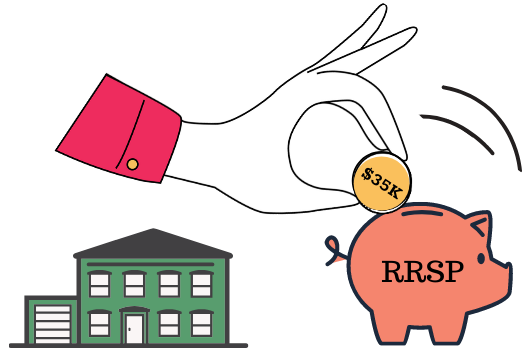
The money you withdraw will be considered a loan (from your retirement funds) and you’ll have to replace it within 15 years. It’s important to consider whether you’ll be able to keep up with the repayment schedule when considering the HBP. There is, however, one catch. The money you withdraw will be considered a loan (from your retirement funds) and you’ll have to replace it within 15 years. It’s important to consider whether you’ll be able to keep up with the repayment schedule when considering the HBP.
In order to participate in the HBP, you must:
- Be considered a first-time homebuyer. The government outlines specific criteria for qualifying as a first-time homebuyer.
- Have a written agreement that proves you are buying or building a qualifying home for yourself or a related person with a disability.
- Be a resident of Canada when you withdraw the funds from your RRSPs and up to the time a home is bought.
- Intend to occupy the home within one year after buying it.
- If you’ve previously participated in the HBP, you may be able to do so again if your repayable HBP balance on January 1 of the year of withdrawal is zero and you meet all the other requirements.
Other costs in the homebuying process
When buying a home in Canada, it’s important to account for additional costs beyond the purchase price. Here are the key points to keep in mind:
- The Foreign Buyers Ban bans foreigners from buying residential property in Canada. However, if you’re not a permanent resident and want to buy a home here, there may be certain exceptions to your situation. Be aware that you will still be subject to a foreign buyer’s tax, or the Non-Resident Speculation Tax (NRST).
- Provincial and municipal taxes. Check to see if where you’re moving is subject to provincial and city taxes. For example, Toronto homeowners pay both provincial land transfer tax and municipal transfer tax.
- Closing costs. Make sure your home-buying budget includes costs like furniture, movers, sales tax, utility adjustments, and appraisal fees.
Land transfer taxes
Apart from Alberta and Saskatchewan, every province has a land transfer tax (LTT) that you pay once you close the sale on your new home. However, the way it’s calculated varies from province to province.
For instance, in Nova Scotia, individual municipalities decide on the tax rate. In Prince Edward Island, the land transfer tax is 1% of either the purchase price or assessed value (whichever is greater).
In Alberta, however, there’s a land transfer registration fee instead, which is calculated as $50, plus $2 for every $5,000 in property value, making it significantly cheaper than LTT.LTT is paid to the province. The amount of tax you’ll pay depends on two things: the amount you paid for the home and the amount of debt you had to take to buy it. Ontario, B.C., and P.E.I. offer rebates on the LTT, though the maximum amounts available on each vary.
Toronto charges homebuyers a municipal land transfer tax that is paid on top of the Ontario land transfer tax. However, Toronto offers its own rebate, the maximum value of which is $4,475.
Land transfer taxes in action
How do taxes affect your budget? Well, the benchmark home price in Toronto as of June 2025 is $1,101,691. Using this example, according to the land transfer tax calculator, you would pay $28,267.64 in tax to the City of Toronto as a first-time home buyer. You’d also pay the same amount for the provincial land transfer tax. That means the final price tag on your $1,101,691 home just rose to $1,129,956.64.
Property taxes
Next up on the list of tax expenses is property tax, which is an annual charge that varies based on where you live. If you live outside of a town or a city, then you pay a Provincial Land Tax (PLT). If you live within a municipality, then you pay a Municipal Property Tax.
PLT is calculated as follows: Current tax rate multiplied by the market value of your property. Keep in mind that the market value of your property is different than the price you paid for your home.
Municipal Property Tax (MPT) is based on the municipal tax rate, the education tax rate (which each province sets), and the market value of your property.
Property tax can be paid in instalments or rolled into your mortgage, depending on the lender you’re working with.
Property tax and utility adjustments
When you take possession of your home, don’t forget to account for utility costs like heat, water, and hydro. If you move mid-month, the previous owners may not have been billed utilities yet, leaving you responsible for charges incurred before your move-in date.
To avoid this, contact the utility companies ahead of time. Inform them of your move-in date and ensure any outstanding charges before that time are assigned to the previous owners.
The same applies to property taxes, so it’s best to get in touch with the appropriate parties to confirm the exact dates of responsibility and avoid paying for any periods before your ownership began.
In order to avoid any surprises, ask your real estate lawyer to track any adjustments that need to be accounted for when the sale of the home closes.
Appraisal fees
Another additional cost that comes with buying a home is hiring an appraiser to assess the value of the property you’re interested in. This can cost anywhere from $300 to $500, though the price depends on your appraiser.
Why is getting an appraisal important? Well, to start, it’s a non-negotiable step in getting approved for a mortgage. In fact, lenders will typically get one of their pre-approved appraisers to scope out the home, similar to the way auto insurance companies will try to send you to one of their preferred body shops to have repairs completed.
Title insurance
Title insurance protects you against things like forgery, fraud, and identity theft — basically any sort of loss that’s related to the ownership of the property. While you’re not legally required to have it, you can purchase it via your real estate lawyer or directly from a title insurance company.
When it comes to title insurance, there are two types: owner’s policy and lender’s policy.
An owner’s policy, as you might guess from the name, protects the owner. A lender’s policy, on the other hand, protects the lender.
Typically, title insurance will cost you a one-time fee of up to $300, but the cost can vary greatly depending on the value of your property and the insurance company that’s providing the coverage. It’s a good idea to use a title insurance calculator to get a quote.
Extra costs…
Sales tax: If you’re buying a newly built home, you will also be subject to a sales tax. This isn’t the case in every province, but if it’s applicable to where you live, there’s some good news: you could be eligible for a tax rebate.
Warranty: If you’re buying a newly built home, it will come with a warranty. It’s up to you to verify whether or not the warranty costs get folded into the sale price or if you’ll need to pay them when you close the sale. It’s possible, too, that the builder will charge enrollment or solicitors fees, so make sure you ask every question you can think of in this regard.
Movers: Moving often takes more time and energy than expected, especially for long distances. Hiring movers can help, but be sure to budget for the cost. Fees depend on the distance and services (packing and moving or just moving). Always get a quote beforehand and consider purchasing moving insurance to protect against potential damages.
Foreign buyer taxes: Introduced in 2023, the Parliament implemented a ban that prevents foreign homebuyers from buying residential properties in Canada. This is still in effect and is now extended to January 1, 2027. The ban is meant to improve housing affordability and control bidding wars for Canadian residents.
However, some are exempt from the ban including those with temporary work permits, refugee status, and non-Canadians co-purchasing property with their Canadian spouse.
If these exemptions apply to you, you will have to pay a Non-Resident Speculation Tax (NRST).The NRST varies from province to province. For instance, in Ontario, foreign buyers are subject to an annual 25% non-resident speculation tax, whereas in British Columbia, foreign buyers are subject to a 20% tax.
However, NRST rebates may be available for foreign nationals who have paid the tax and become permanent residents within four years of purchasing a property.
Home insurance
Before lenders approve your mortgage, most will require you to have home insurance. Here’s a snapshot of the key takeaways:
- Home insurance covers the cost to rebuild your house (materials and labour) — not its market value. This is referred to as “actual cost” versus “replacement cost.”
What does home insurance cover?
While not legally required the same way auto insurance is for drivers, home insurance is often mandatory to secure a mortgage.
Here's a detailed look at what’s covered and the minimum coverage requirements.
- Dwelling coverage: Protects the structure of your home (walls, roof, floors) against damage from events like fire, windstorms, hail, and falling objects. Coverage is based on the replacement value of your home.
- Personal property coverage: Covers your belongings, such as furniture, electronics, and clothing, against theft, fire, or other insured events. Minimum coverage starts at $40,000.
- Personal liability coverage: Protects you if someone is injured on your property or if you accidentally damage someone else’s property. Standard coverage is $1 million.
- Additional Living Expenses (ALE): Covers temporary living costs if your home becomes uninhabitable due to an insured event, including hotel stays, meals, and rental cars.
- Optional add-ons
- Flood insurance: Covers overland flooding.
- Earthquake insurance: Essential in high-risk areas like British Columbia.
- Sewer backup coverage: Protects against water damage from sewer backups.
The best way to secure a low home insurance rate is to compare the market. Get started by filling out the form below.
What doesn’t home insurance cover?
Home insurance doesn’t cover every little misfortune that may befall your house. It’s designed to cover unexpected emergencies, not problems caused by neglect or avoidable circumstances.
Here’s a breakdown of what’s excluded.
- Neglect and maintenance issues: Home insurance won’t cover damage caused by poor upkeep or negligence. For example, if your roof caves in due to lack of maintenance, you’ll need to prove you took reasonable steps to prevent it.
- Overland flooding and sewer backup: These are not included in standard policies but can be added as optional endorsements. With flooding on the rise in urban areas, adding this coverage is worth considering depending on your location.
- Replacement cost vs. Market value: Insurance covers the replacement cost of your home, not its market value. You’ll be reimbursed for the cost to rebuild, not what your home would sell for. Frequent claims will raise the cost of your insurance premiums. If the cost of repairs is manageable, consider paying out of pocket to avoid higher insurance costs in the future.
What are the other kinds of home insurance coverages
Comprehensive insurance protects your home’s structure and contents against all insurable perils, except those explicitly excluded (e.g., wear and tear). It’s the most expensive, extensive and robust coverage available, offering maximum protection.
Named perils protects your home and belongings against the specific risks that you list in your policy (e.g., fire, theft). If you haven’t named it explicitly on your policy, you’re not covered for it.
Broad insurance covers your home’s structure against all insurance perils and your content against only perils that you name. This is a middle ground option that balances cost and coverage.
No-frills insurance is for homes that don’t meet underwriting standards. Most commonly, these are homes under construction or with significant structural issues.
How do I get home insurance?
You can get home insurance through a direct insurance provider or through the company that provides your car insurance. Many insurers offer discounts for bundling your auto and home policies.
What if I rent out my property?
Renting out part of your property can be a great way to generate income and contribute to the housing supply. But before you start welcoming tenants, make sure you have the right insurance coverage in place.
Home insurance vs. Landlord insurance
Your insurance needs depend on how you plan to rent out your space:
Renting out the entire home or a separate unit (like a basement suite)? You’ll need landlord insurance. A standard homeowner’s policy won’t cover the unique risks landlords face, such as tenant-related damage or loss of rental income.
Renting out a room while you live in the home? Your existing home insurance might be sufficient, but it’s still wise to check with your provider. In this case, your tenant (or roommate) should carry renters or tenant insurance with at least $1 million in liability coverage to protect their belongings and cover damages.
A typical landlord insurance policy will cover damage from fire, water, and rental income (if you should need to vacate the suite while repairs are being made). For added protection, you can customize your policy with optional coverage for personal liability, theft of your belongings, and vandalism.
While landlord insurance is generally more expensive than a standard homeowner’s policy, and may reduce your rental profits, it offers peace of mind when the unexpected happens. Additionally, you can claim landlord insurance on your taxes.
Keep in mind that, like all home insurance policies, landlord insurance does not cover damage from neglect, poor maintenance, or issues caused by insects and rodents.
Additional considerations: The Canada Secondary Loan Program. With housing in high demand, renting out part of your property can be a smart way to generate income and contribute to the housing supply. Through the Canada Secondary Suite Loan Program, homeowners can now access low-interest loans to create rental units within their properties.
This program helps cover renovation costs, making it easier to add a basement suite or convert unused space into a rental unit. Not only does this provide additional income, but it also increases your property’s value while addressing housing shortages.
House hunting
House hunting for the first time?
Key takeaways:
- Make a detailed checklist. Outline your must-haves and nice-to-haves, including location, size, and features, to stay focused during your search.
- Work with a real estate agent. A knowledgeable agent can guide you through market conditions, neighbourhoods and pricing trends in a given area.
- Understanding bidding wars. These happen when there are multiple offers made on a home with details kept confidential. Act quickly and strategically.
- Budget for closing costs, such as home inspection fees, land transfer tax, and legal fees in your financial plan to avoid surprises.
Where do I start?
First-time home buyers should make a list of all your requirements and preferences before starting the house hunt.
Detailing your must-haves and nice-to-haves will help you stay on track when the house-hunting process becomes daunting. It will help you easily narrow down your top picks and help you place reasonable offers on them.
Should I hire a real estate agent?
A good real estate agent will help you find the ideal home, negotiate on your behalf to help you get the best deal, coordinate a home inspection, and deliver your closing documentation.
It’s not mandatory, but a real estate agent can make your journey to becoming a homeowner much simpler. Especially when you are a first-time buyer with little knowledge about the homebuying process.
Using a realtor also allows you to have access to the MLS system, which is operated by the Canadian Real Estate Association. This gives you more options not available to the public.
It’s in your best interest to have an experienced professional who’s knowledgeable about the current real estate market conditions in your corner to guide you through these tricky decisions.
Buying your first home
Purchasing your first home doesn’t have to be intimidating. Here are our main tips for first-time homebuyers.
Choosing the right neighbourhood
Some questions you’ll want to ask yourself to make sure the home will be right for you:
- How safe does the neighbourhood feel at night and during the day?
- How far is it to and from work?
- Is there access to public transportation, recreational facilities, shopping, or schools?
- Are there any upcoming developments in the area?
- What are the potential damage risks particular to that area? Is it prone to frequent floods or wildfires?
It’s impossible to predict exactly what it will be like to live in your chosen neighbourhood. To get as close as possible though, it’s important to look for homes in an area that not only fits your needs and wants but is also in a place you’d be comfortable calling home.
Bidding wars
In a seller’s market, prospective homebuyers are likely to find themselves in a bidding war. In a bidding war, all potential buyers submit offers knowing only the number of bids, as further details remain confidential.
First-time homebuyers often get caught up in the excitement and offer way more than they can afford for the sake of potentially beating out their competitors. Big mistake.
If you want to have a fighting chance during a bidding war, you're going to have to leave your emotions at the door. Before you start the process, decide on a maximum offer that you will not exceed. Focus on what a particular home is worth to you and stick to it, rather than worrying about what other bidders might offer.
Take a step back and breathe. The perfect home — one that's affordable and won’t leave you with buyer’s remorse or leave you house-poor — is still out there.
Should I get a home inspection before I bid?
A home inspector evaluates the structures and systems that make up your potential home to check that everything is in good working order.
While not mandatory, the Canada Mortgage and Housing Corporation (CMHC) recommends that you include a home inspection as a condition when you make an offer to buy a home.
Getting a home inspection on a condo isn't mandatory either, but it’s useful to point out any existing or potential problems with the physical condition of the condo and possible repairs needed before you buy it.
Once you are the owner of the property, any surprise repairs have the potential to burn a huge hole in your pocket, especially if they are related to the overall structure. Making inspections prior to purchase is a wise decision not only for the first-time buyer, but all buyers.
What happens after your offer is accepted
If the offer you accepted had conditions, it would be considered “sold conditional” until you sign on the dotted line. Here’s a breakdown of what you’ll need to do next as part of the mortgage approval process:
- Sort out your financing. Visit your lender or broker to verify and finalize the details of your mortgage.
- Review any conditions that were part of the offer.
- Arrange for a home inspection and appraisal.
- Tie up loose ends and do a final walkthrough of the property.
- Apply for home insurance. Your mortgage lender will require the home insurance policy for closing.
- Before moving in, you may also have to pay for moving costs, storage costs, real estate costs for selling your home (if applicable). And don’t forget to change your address for all mail and IDs.
Making renovations on your home
Renovating your home can improve its functionality and value, but there are important considerations to keep in mind. Here are the key takeaways from this section:
- You may be eligible for a tax credit if you make accessibility-related renovations to your home.
- Always notify your home insurance provider of any renovations ahead of time to ensure you have enough coverage for any damages.
- If you hire a professional to do your renovations, make sure they have their own insurance coverage to protect against liabilities.
- While renovations can add value to your home, costly home improvement projects don't always guarantee a higher return on investment.
Tax credits
If you renovate your home, don’t forget to take advantage of available tax credits. While not every province offer them, the federal Home Accessibility Credit (HATC) lets seniors (65+) or their families (that they live with) claim expenses for safety and accessibility upgrades.
Under the HATC, you can claim up to a maximum of $20,000 per year for eligible renovations. So, for instance, if your renovation expenses add up to $10,000, you could earn a maximum of $2,000 back. Make sure you check out the federal government’s list of eligible and ineligible expenses.
In New Brunswick and British Columbia, there’s a similar provincial tax credit for seniors who make renovations to their homes, but it’s worth only 10% of eligible expenses.
Dos and don’ts
Whatever you do, make sure to notify your home insurance company about any renovations, since this can affect your policy. You might also need additional insurance while the renovations are going on.
Hiring a contractor versus DIY
If upgrades are needed in your new home, you can either hire a professional to do it or — if you have the skills, time, and interest — do some of the work yourself.
Apart from getting the job done faster, a good contractor will do the job right and efficiently. They will also know what regulations to follow, what (if any) permits are required, what resources are needed, and when it’s time to involve other contractors.
But there’s a hefty price to pay for calling a pro. Depending on the project, the cost of hiring a contractor can add up to hundreds of thousands because you’re paying for labour, in addition to materials. Get a few quotes from different contractors before going ahead with any major renovation.
Furthermore, understand the risks that come with hiring a pro to do work on your home and make sure whoever you hire also has their own insurance coverage so they can make a claim to reimburse you if there’s any damage. Lastly, always ask to see a contractor’s certification before hiring them.
The most obvious benefit of the DIY approach is the money you save. You may even pick up some skills along the way. Just keep in mind that renovations can get complicated so committing to a DIY project can be a huge time commitment. If you’re in a hurry, it might not be in your best interest to take it on.
Before you commit to a major DIY reno, remember there are projects that require expertise you don’t have. The Canadian Home Builders' Association (CHBA) generally recommends renovators leave structural and mechanical renovations to the professionals.
Impact on resale value
When done right, renovations will increase the value of your home. While certain home improvements will yield the biggest return, almost any project has the potential to negatively affect resale value.
Some projects offer more of an emotional return than a financial one. This doesn't mean you shouldn't undertake the project, it just means you shouldn't anticipate that the value of your home will automatically increase. Consider practical upgrades along with the changes that could guarantee the greatest return on investment.
As you make decisions regarding renovations for the purpose of reselling, pay attention to the market value of your home and the homes around you. Different housing markets have different trends, depending on factors like location, local climate, and tastes, so it’s important you have a good idea of what buyers in your area want before you invest in any renovations.
Additional information for first-time homebuyers
As we conclude our First-time Homebuyers Guide 2023, here is a list of useful resources that can help you buy your dream home. Please note that these links are only meant to educate, raise awareness, and find the right help to optimize your homebuying experience.
If you still have queries, we suggest getting in touch with a real estate agent or a real estate lawyer, as they can provide greater insight into the homebuying process. Irrespective of whether you are a first-time buyer or an experienced buyer, you might need some additional assistance through the homebuying process.
As we conclude our First-time Homebuyers Guide 2023, here is a list of useful resources that can help you buy your dream home. Please note that these links are only meant to educate, raise awareness, and find the right help to optimize your homebuying experience. If you still have queries, we suggest getting in touch with a real estate agent or a real estate lawyer, as they can provide greater insight into the homebuying process.
Government-approved guides
CMHC's Homebuyers Checklist — Check out Canada Mortgage and Housing Corporation (CMHC)’s detailed checklist that guides through every step of the home buying process.
Government of Canada - Buying a home — This is an official page by the Government of Canada that helps Canadians in understanding the steps involved with homebuying, with links to additional authoritative resources.
Calculators
LowestRates.ca Mortgage Calculator — Try our easy-to-use mortgage calculator to get an estimate on your mortgage payments.
LowestRates.ca Mortgage Default Insurance Calculator — If you’re putting down less than 20%, use this calculator to get an estimate of your CMHC mortgage insurance premiums.
LowestRates.ca Land and Property Transfer Tax Calculator — Estimate how big your tax bill will be in every province that charges land transfer taxes.
Toronto Property Tax Calculator — This calculator from the City of Toronto provides property tax estimates in Toronto.
Niagara Property Tax Calculator — Use this calculator to check out property tax expenses in the Niagara region.
British Columbia Property Tax Calculator — An efficient property tax calculator for the province of British Columbia.
Useful tools
CREA National Price Map — An interactive map that highlights average property rates in each province.
Find a Realtor — A useful website to find realtors, houses on sale, and more.
HomeStars — A website that provides home renovation services, including a blog for DIY home renovations.


